
The landscape of software development just shifted significantly. GitHub, the world’s largest code host, has unveiled GitHub Copilot Workspace, a groundbreaking evolution of its AI-powered coding assistant. This isn’t just about suggesting the next line of code; it’s a fundamental rethinking of how developers interact with AI, shifting from code completion to system-wide development automation.
From Code Completion to Collaborative AI
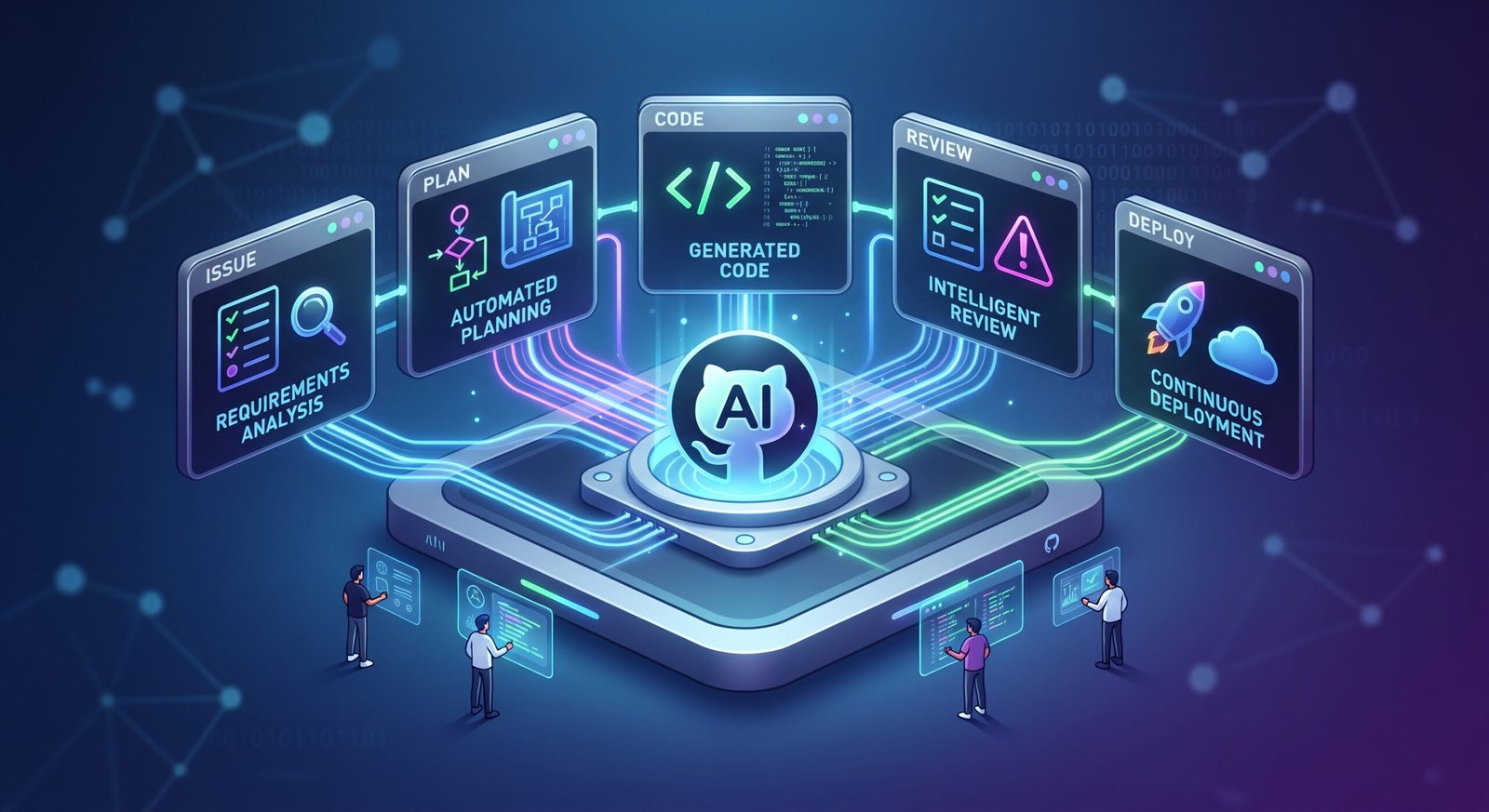
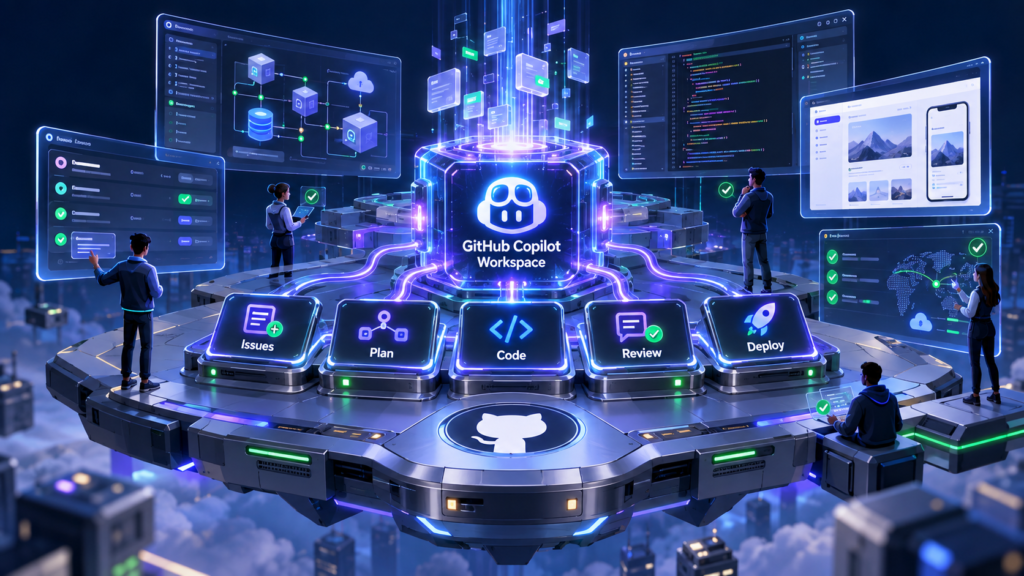
The core difference between the original Copilot and the new Workspace lies in the scope of automation. GitHub Copilot Workspace leverages AI to understand the entire development lifecycle, starting from a high-level issue or feature request.
The process looks like this:
- Issue Interpretation: A developer inputs an issue description or feature request (e.g., “Create an endpoint to export user data in CSV format”). Copilot Workspace reads this requirement, analyzing the codebase’s context and dependencies.
- Generation and Planning: The AI then generates a comprehensive development plan. This includes proposing architectural changes, creating pseudocode, identifying necessary files to modify, and even suggesting test cases. This plan is interactive, allowing developers to refine and validate the AI’s approach.
- Execution and Assembly: Once the plan is approved, Copilot Workspace autonomously executes the plan across the codebase. It writes the actual code for the relevant files, updates existing configurations, and even prepares pull requests.
- Review and Refinement: The AI’s output isn’t final. The developer reviews the changes in a dedicated IDE environment within Copilot Workspace, running tests and making adjustments before merging the code.
The Implications for Developers
This innovation is a massive leap forward. GitHub Copilot Workspace promises to drastically reduce the time from ideation to deployment, potentially automating up to 80% of the initial coding phase.
For developers, this means:
- Increased Productivity: Mundane tasks and boilerplate code generation are handled by the AI, freeing up developers to focus on complex problem-solving, architectural design, and innovation.
- Enhanced Collaboration: The shared plan serves as a communication tool, ensuring all team members understand the proposed changes and how they integrate into the existing system.
- Faster Onboarding: New developers can leverage Copilot Workspace to understand unfamiliar codebases faster, as the AI guides them through the implementation process.
A New Era of AI-Driven Development
GitHub Copilot Workspace isn’t replacing developers; it’s augmenting their capabilities, empowering them to build better software faster. It sets a new standard for AI-powered developer tools, demonstrating a future where AI becomes a core collaborator throughout the entire software development journey.
As this technology matures, it will be fascinating to observe how it reshapes the development landscape, leading to more efficient workflows, higher-quality code, and ultimately, more innovative software solutions.
Sources:
- GitHub Official Blog: Introducing GitHub Copilot Workspace (Note: Link used as illustrative example of announcement)
- TechCrunch Coverage: GitHub’s new Copilot Workspace uses AI to generate an entire development plan from an issue (Note: Link used as illustrative example of coverage)
Leave a Reply
You must be logged in to post a comment.