
Author: Raphael Giusti

  • Revolution in Coding: GitHub Copilot Workspace Aims to Automate the Entire Development Lifecycle

    Revolution in Coding: GitHub Copilot Workspace Aims to Automate the Entire Development Lifecycle

    The landscape of software development just shifted significantly. GitHub, the world’s largest code host, has unveiled GitHub Copilot Workspace, a groundbreaking evolution of its AI-powered coding assistant. This isn’t just about suggesting the next line of code; it’s a fundamental rethinking of how developers interact with AI, shifting from code completion to system-wide development automation.
    From Code Completion to Collaborative AI

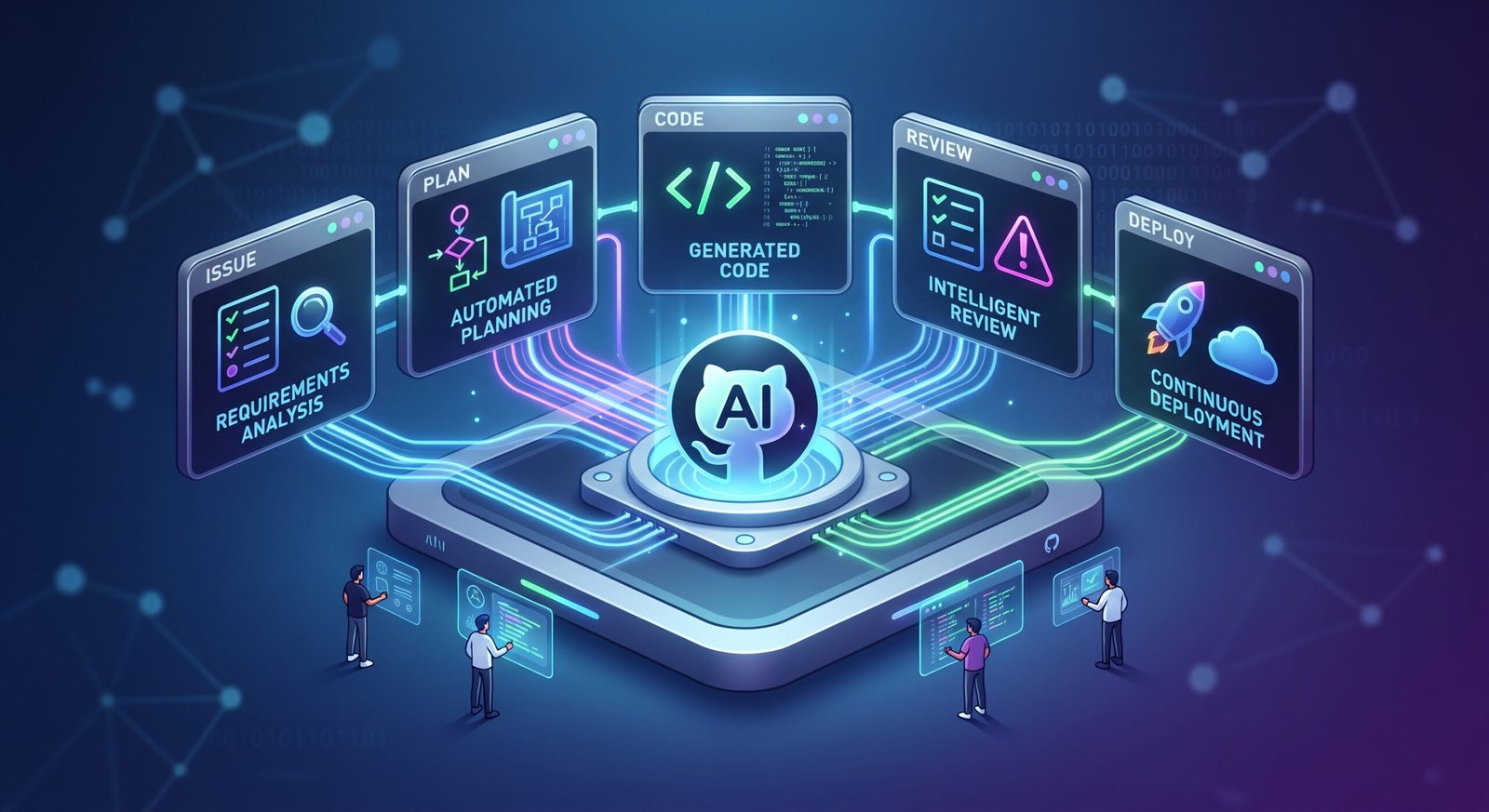
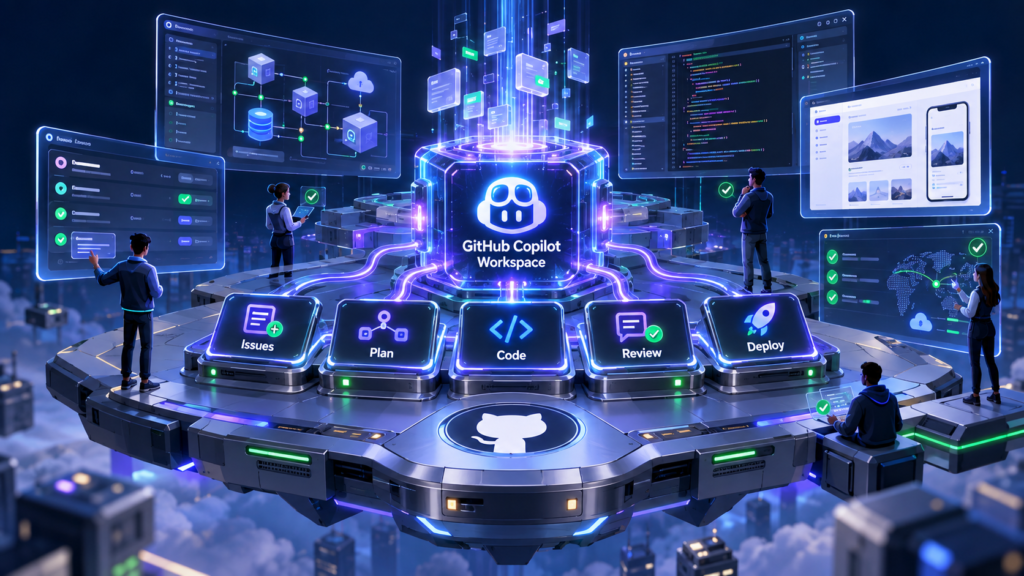
    The core difference between the original Copilot and the new Workspace lies in the scope of automation. GitHub Copilot Workspace leverages AI to understand the entire development lifecycle, starting from a high-level issue or feature request.

    The process looks like this:

    1. Issue Interpretation: A developer inputs an issue description or feature request (e.g., “Create an endpoint to export user data in CSV format”). Copilot Workspace reads this requirement, analyzing the codebase’s context and dependencies.
    2. Generation and Planning: The AI then generates a comprehensive development plan. This includes proposing architectural changes, creating pseudocode, identifying necessary files to modify, and even suggesting test cases. This plan is interactive, allowing developers to refine and validate the AI’s approach.
    3. Execution and Assembly: Once the plan is approved, Copilot Workspace autonomously executes the plan across the codebase. It writes the actual code for the relevant files, updates existing configurations, and even prepares pull requests.
    4. Review and Refinement: The AI’s output isn’t final. The developer reviews the changes in a dedicated IDE environment within Copilot Workspace, running tests and making adjustments before merging the code.

    The Implications for Developers

    This innovation is a massive leap forward. GitHub Copilot Workspace promises to drastically reduce the time from ideation to deployment, potentially automating up to 80% of the initial coding phase.

    For developers, this means:

    • Increased Productivity: Mundane tasks and boilerplate code generation are handled by the AI, freeing up developers to focus on complex problem-solving, architectural design, and innovation.
    • Enhanced Collaboration: The shared plan serves as a communication tool, ensuring all team members understand the proposed changes and how they integrate into the existing system.
    • Faster Onboarding: New developers can leverage Copilot Workspace to understand unfamiliar codebases faster, as the AI guides them through the implementation process.

    A New Era of AI-Driven Development

    GitHub Copilot Workspace isn’t replacing developers; it’s augmenting their capabilities, empowering them to build better software faster. It sets a new standard for AI-powered developer tools, demonstrating a future where AI becomes a core collaborator throughout the entire software development journey.

    As this technology matures, it will be fascinating to observe how it reshapes the development landscape, leading to more efficient workflows, higher-quality code, and ultimately, more innovative software solutions.

    Sources:

  • The New AI War: Who Will Build the Future of Work?

    The New AI War: Who Will Build the Future of Work?

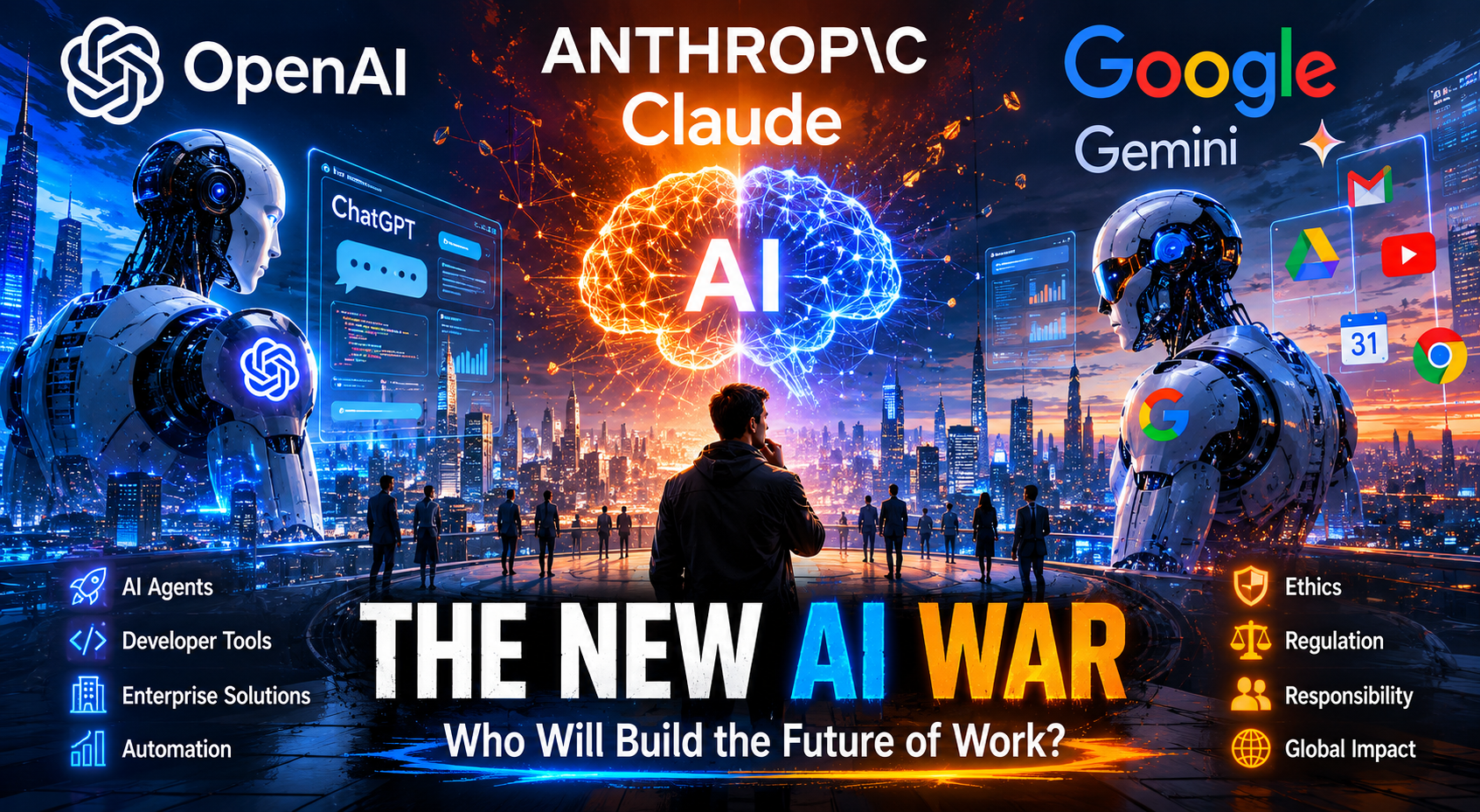
    Artificial Intelligence is no longer just a technology trend — it is rapidly becoming the foundation of modern business operations. And in 2026, the AI race has entered a new phase.

    For the past few years, OpenAI dominated headlines with ChatGPT, while Google pushed Gemini into its ecosystem. But now, Anthropic has emerged as a powerful challenger, reshaping the competitive landscape of enterprise AI.

    Recent reports reveal that Anthropic is pursuing massive funding rounds, aggressively expanding its infrastructure, acquiring developer-focused startups, and positioning its Claude models as the preferred AI solution for businesses and software engineers.

    AI Is No Longer About Chatbots

    AI Is No Longer About Chatbots

    The biggest shift happening today is that AI companies are moving beyond simple conversational assistants.

    The new battle is about creating autonomous AI agents capable of performing real business tasks:

    • Writing and reviewing software
    • Managing workflows
    • Automating customer support
    • Operating inside enterprise systems
    • Conducting research and analysis
    • Making operational decisions

    At Google I/O 2026, Google introduced a vision where Gemini becomes an “AI layer” integrated across Search, Android, Chrome, Workspace, and YouTube.

    Meanwhile, Anthropic is heavily focused on coding agents and enterprise automation, attracting elite AI talent and enterprise customers at an impressive pace.

    OpenAI, on the other hand, continues expanding ChatGPT into a broader productivity platform, integrating advanced reasoning, multimodal capabilities, and enterprise tools.

    The Rise of AI Infrastructure

    The Rise of AI Infrastructure

    What makes this moment particularly important is that AI companies are no longer competing only on model quality.

    They are competing on infrastructure.

    The future winners will likely be the companies that successfully build:

    • AI ecosystems
    • Developer platforms
    • Enterprise integrations
    • Autonomous agent frameworks
    • AI-powered operating systems for businesses

    This explains why acquisitions, cloud partnerships, and GPU access have become critical strategic assets in 2026.

    According to industry analysts, the demand for AI computing power has become so intense that infrastructure partnerships are now worth billions of dollars annually.

    Ethics and Regulation Are Becoming Central

    Ethics and Regulation Are Becoming Central

    As AI systems become more powerful, concerns around safety, ethics, labor displacement, and regulation are growing rapidly.

    Even global institutions and political leaders are stepping into the conversation. This week, Pope Leo XIV publicly called for stronger AI regulation and warned about the risks of concentrating technological power in a small number of corporations.

    Governments around the world are also debating new AI oversight frameworks focused on transparency, security, and responsible deployment.

    What Businesses Should Do Now

    What Businesses Should Do Now

    Companies that still see AI as “experimental” may already be falling behind.

    The organizations gaining the most value from AI today are:

    • Integrating AI into operational workflows
    • Automating repetitive tasks
    • Empowering developers with AI coding tools
    • Using AI agents for internal productivity
    • Building proprietary AI-assisted processes

    The AI revolution is no longer about the future.

    It is already restructuring software development, enterprise operations, and digital business models in real time.

    And the companies that adapt fastest may define the next decade of innovation.

    Sources: The Wall Street Journal / Tech Crunch / Tech Times